Homegrown apps amongst the B2B SaaS monocrop
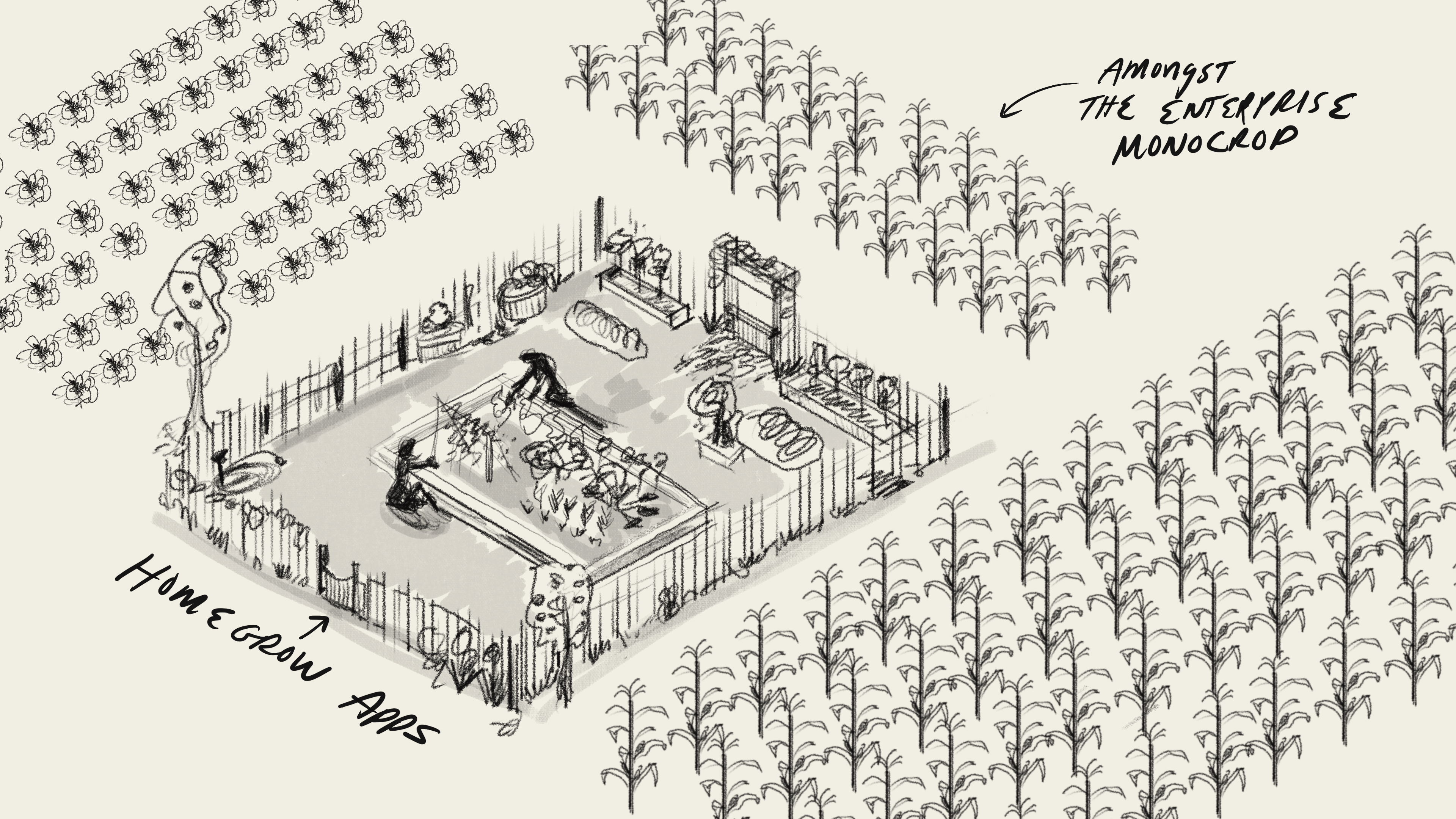
In its current form, the off-the-shelf, prepackaged, bloated management software — Salesforce, Jira, Smartsheet — is dead.
Think of these as the monocrop: GMO, kill the soil, pure standardization. Your tomato is going to come out looking great — round, red — and tasting like absolute shit. Mealy. Watery. It checked every box and delivered nothing worth having.
There are exceptions. The niche, high-quality players — Linear, Superhuman — are user-obsessed with a tight ICP, and it shows. But even they carry this inherent tension: the VC pressure to grow, to broaden, to become the thing they were built to replace.
What’s been coming instead is something more homegrown and flexible. Software that lives close to the people using it. Adaptable, organic, evolving with actual needs — weeds and all. Sometimes things spring up that you didn’t expect. You’re inviting a bit of nature and unpredictability into your systems. That’s not a bug. That’s how you build something resilient.
This shows up in two waves. First, the no-code/low-code tools: Notion, Coda, Airtable, even plain old Sheets. They’ve been quietly absorbing AI capabilities and giving non-developers real power to build. Then the AI tools themselves — ChatGPT, Claude — which are now pushing into collaborative surfaces like Artifacts, blurring the line between “using software” and “making software.”
Why is this happening? We’re moving up the abstraction layer. The top layer — whether that’s drag-and-drop visual builders or just plain natural language — means you don’t have to think about pixels, databases, APIs, or wiring. You describe a problem and start solving it.
The ROI story is shifting too. Old-guard tools cited 15–20% productivity gains. We’re seeing both wilder upside and more pronounced failure with these newer approaches. The difference is that impact now comes from how well you understand the use case — not from the vendor’s benchmark deck. That knowledge is emerging from the field, from practitioners, because these tools are general enough that the expertise has to come from you.